
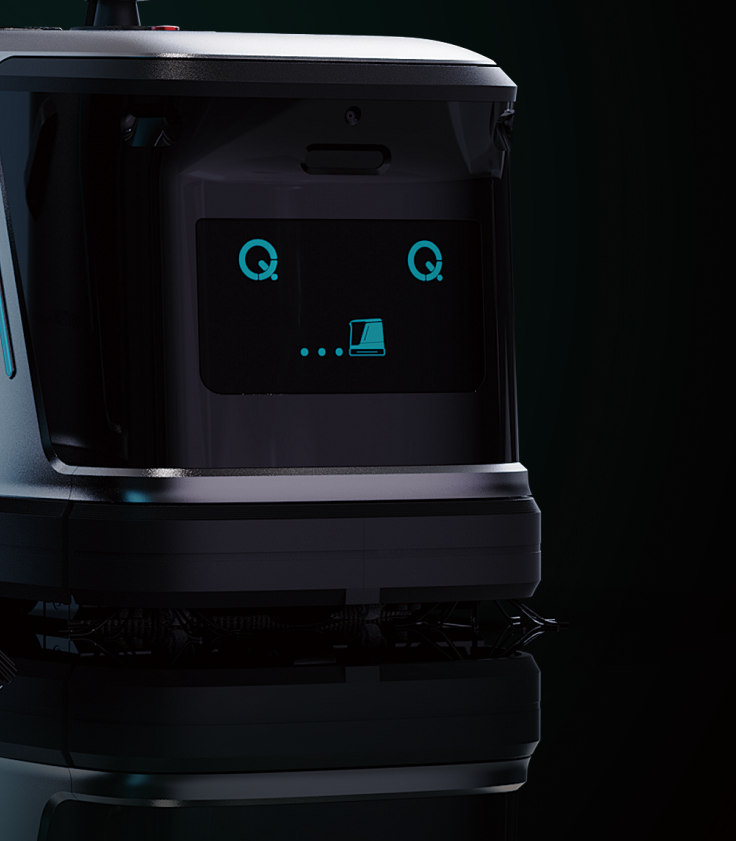
Textile waste does not behave like ordinary dust. Thread ends wrap around brushes, fabric flakes bridge across intakes, and a machine sized for grit fills up within an hour. In a garment plant the cleaning problem is volume and fibre, not surface area.
The Q3-W is built for that specific waste. It pulls 25 kPa through a 670 mm working width, with sweeping wheels and suction sized to take large particles, fibre flakes and thread ends. The 16 L dust box covers up to 4,000 m² before it needs dumping, and the 60 Ah battery supports a full shift of high-intensity work.
Where the Q3-W sits in the range
Q3-W is the fibre-and-fluff specialist. Where waste is heavier, such as packaging, offcuts or grit, the Beetle has the sealed bin and HEPA filtration. Where the floor is carpeted rather than a dry workshop slab, the K1 VAC is the right machine. Q3-W is specifically the answer for dry production floors that generate textile waste faster than a general sweeper can clear it.
What sets the Q3-W apart
- 25 kPa suction tuned for fabric fibre, thread ends, cloth scraps and dust
- 16 L dust box covering up to 4,000 m² per dump, so emptying does not interrupt production
- Special sweeping wheels and high suction take large particles and fibre flakes in the same pass
- Ternary lithium 46.8 V / 60 Ah battery for four to six hours of continuous operation
- Smart mapping and precise navigation across a production floor whose layout changes
- Elevator calling, so a multi-level plant can be covered by one machine
- Charging dock with a built-in fire extinguisher, which matters in a textile environment
- Rated for 0 – 40 ℃ operating temperature, matching an unconditioned workshop
Q3-W specifications
| Model | Q3-W |
|---|---|
| Product type | High-suction sweeping and dust-mopping robot |
| Dimensions (L × W × H) | 675 × 516 × 560 mm |
| Product weight | 56 kg |
| Cleaning modes | Sweeping · dust-mopping |
| Working width | 670 mm |
| Working efficiency | 500 – 800 m²/h |
| Dust box | 16 L |
| Battery | Ternary lithium 46.8 V / 60 Ah |
| Runtime | 4 – 6 hours |
| Charging time | 3 hours |
| Maximum speed | 0.8 m/s |
| Maximum climbing angle | 8° |
| Charging base | 425 × 220 × 333 mm, 14.5 kg |
| Base input / output | AC 200 – 240 V / 54.6 V, 1,350 W, 24 A |
| Operating temperature | 0 – 40 ℃ |
Best suited to
Garment and textile factories where cutting and sewing floors collect fibre and offcuts. Apparel finishing and packing halls. Dry workshops producing light fibrous waste. Any indoor production floor where a wet scrubber is unsuitable because the process is dry.
Deployment and support
Jaelin Tech supplies the Q3-W worldwide, with commissioning support, operator training, spare parts and remote technical support. Send us your floor area, surface type and the soiling you are dealing with, and we will confirm whether the Q3-W is the right machine or point you to a better fit in the range. OEM and ODM cooperation is available.
Frequently asked questions
Why does a textile plant need different suction from a warehouse?
Because the waste is different. Fibre flakes and thread ends bridge across intakes that handle grit easily, so the suction path and sweeping wheels are built around fibrous material.
What does 4,000 m² per dump mean in practice?
It is the area one full 16 L box covers. On a typical production floor that is most of a shift between dumps, which is what keeps the machine working instead of parked.
Is the charging dock safe in a textile environment?
The dock includes a built-in fire extinguisher. Textile dust is combustible, so this is part of the specification rather than an accessory.
Related models
If your requirement leans a different way:

Reviews
There are no reviews yet.